
Fire Testing
Reaction to Fire vs Fire Resistance: What Each Test Proves
Reaction to fire ranks how a product feeds a growing fire. Fire resistance times how long an assembly holds. Mixing up the two has killed people.
Cone calorimetry, FTIR, fire test standards.
Fire Testing
Reaction to fire ranks how a product feeds a growing fire. Fire resistance times how long an assembly holds. Mixing up the two has killed people.

Fire Testing
A Euroclass such as B-s1,d0 comes from the SBI test. Here is what each letter measures, and why a component class never proves a facade will hold.

Fire Testing
A UL 94 V-0 mark means a plastic bar self-extinguishes under a 50 W flame. Here is what the test measures, and the four things it never promises.
Fire Testing
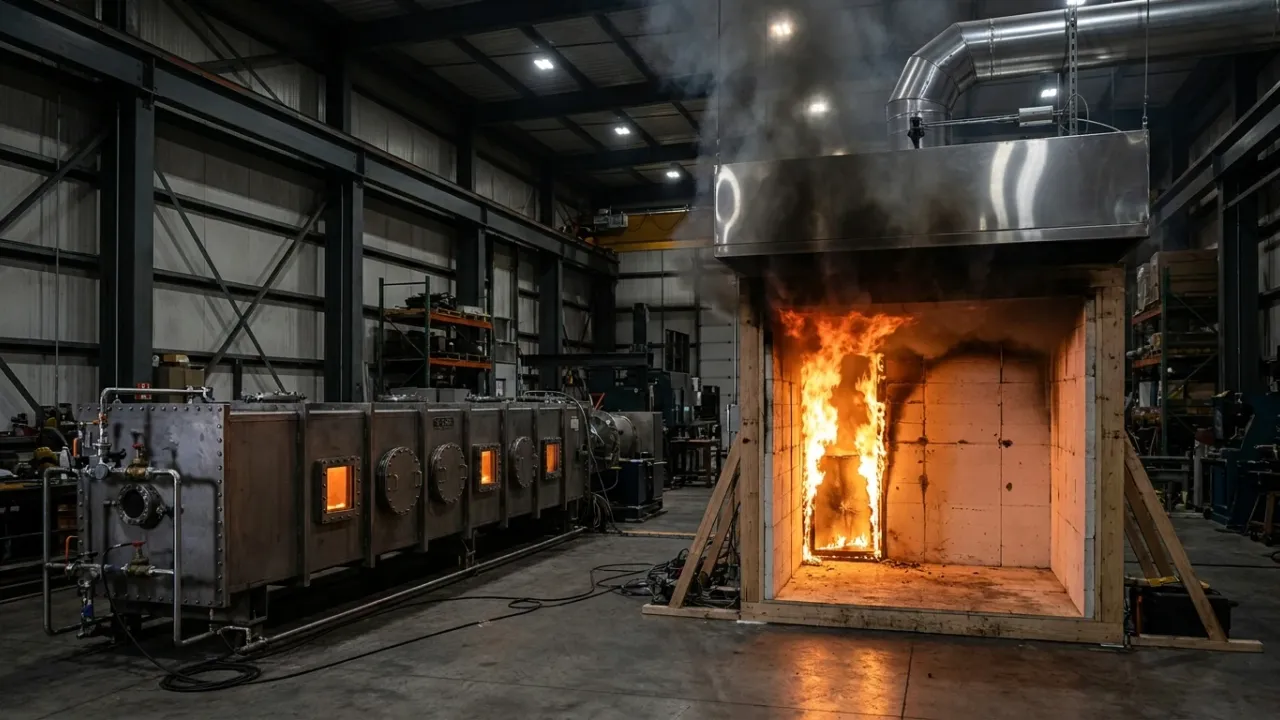
How the ASTM E84 Steiner Tunnel and the ISO 9705 room corner test can rate the same wall lining Class A and a flashover hazard, and which to trust.
Fire Testing
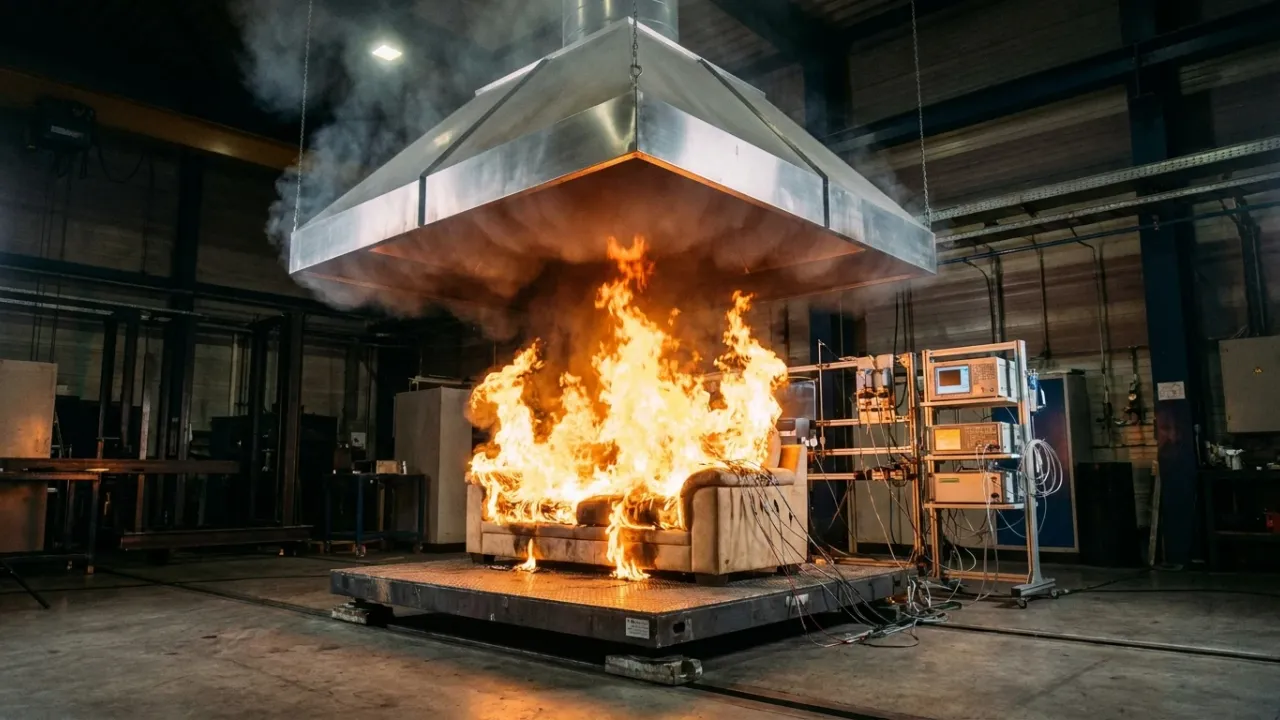
Why heat release rate is the single most important number in fire science: how labs measure it, what it predicts, and why it outranks smoke toxicity.
Fire Testing
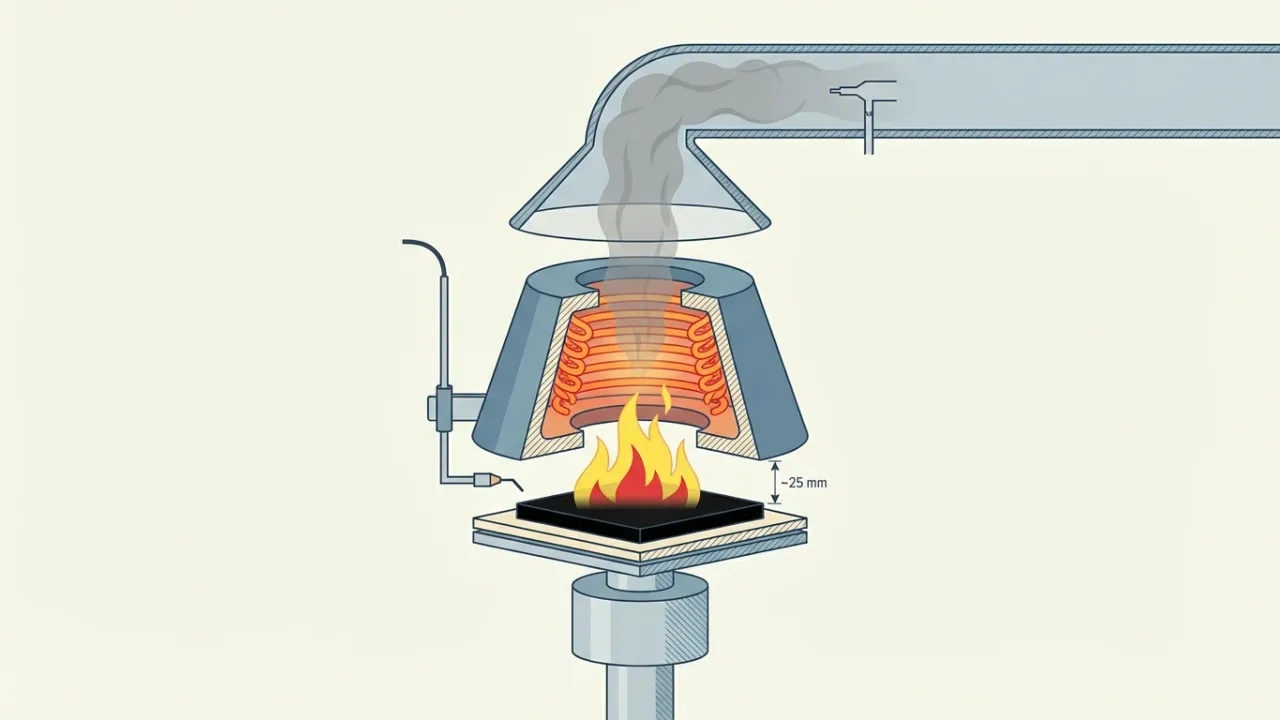
What a cone calorimeter measures — peak heat release rate, total heat release, and MARHE — plus the oxygen-consumption math behind every number.