
Battery Fire Safety
Solid-State Battery Fire Risk: A Sober Look at What Changes
A solid-state battery drops the flammable solvent, not the oxidizer or the lithium. Here comes what changes in thermal runaway, and what stays put.
Li-ion thermal runaway and abuse testing.
Battery Fire Safety
A solid-state battery drops the flammable solvent, not the oxidizer or the lithium. Here comes what changes in thermal runaway, and what stays put.

Battery Fire Safety
Off-gas detection reads the vapour a failing cell breathes out before flame. Here comes the window it buys, the sensors that see it, and the limits.

Battery Fire Safety
A lithium battery fire shrugs off CO₂, halon and dry powder. Here comes the heat budget that explains why water, and only water, ends the event.

Battery Fire Safety
Thermal runaway propagation turns one failed cell into a lost pack. Here comes the heat budget that decides it, and the design that stops it.

Battery Fire Safety
In one year, New York logged 268 lithium-ion battery fires and 18 deaths from e-bikes and e-scooters — and rewrote micromobility safety law.

Battery Fire Safety
Across U.S., Swedish, Australian, Norwegian and Polish data, EV fires happen 20 to 80 times less often than gas car fires per registered vehicle.
Battery Fire Safety
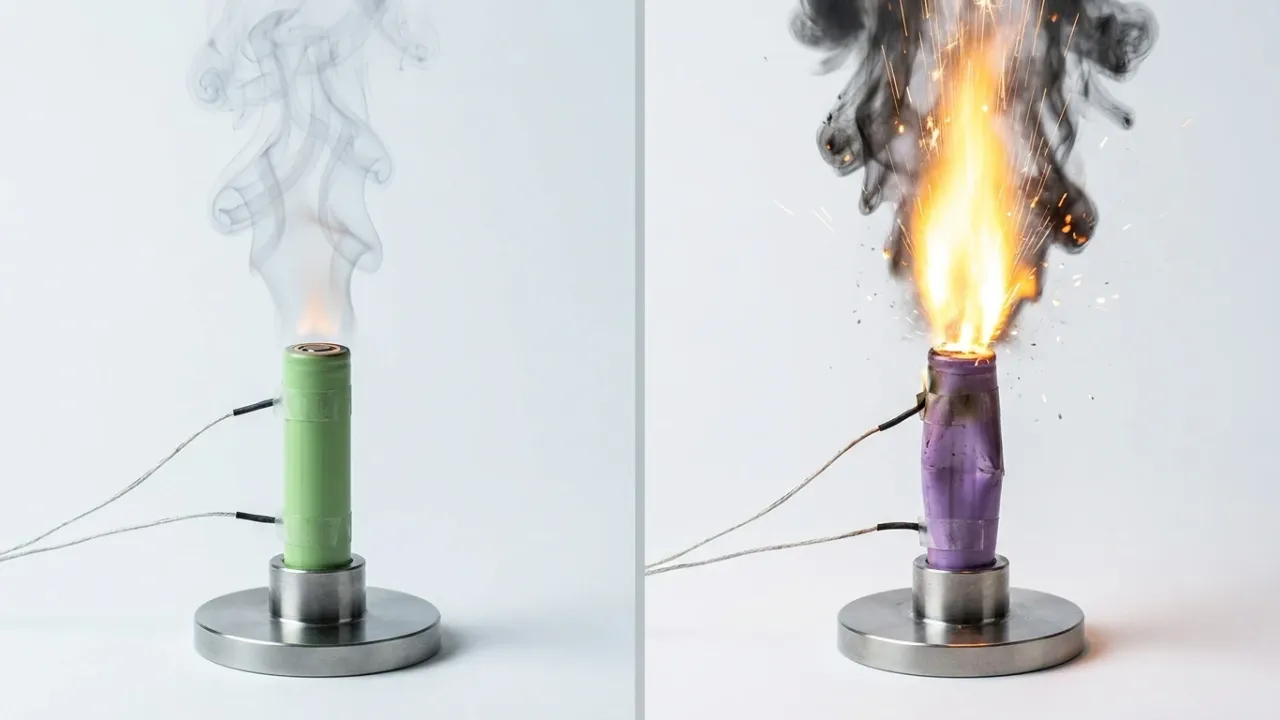
LFP vs NMC battery chemistry sets the fire risk before any vent opens. Here is why one chemistry burns hotter, vents more gas, and explodes more often.
Battery Fire Safety
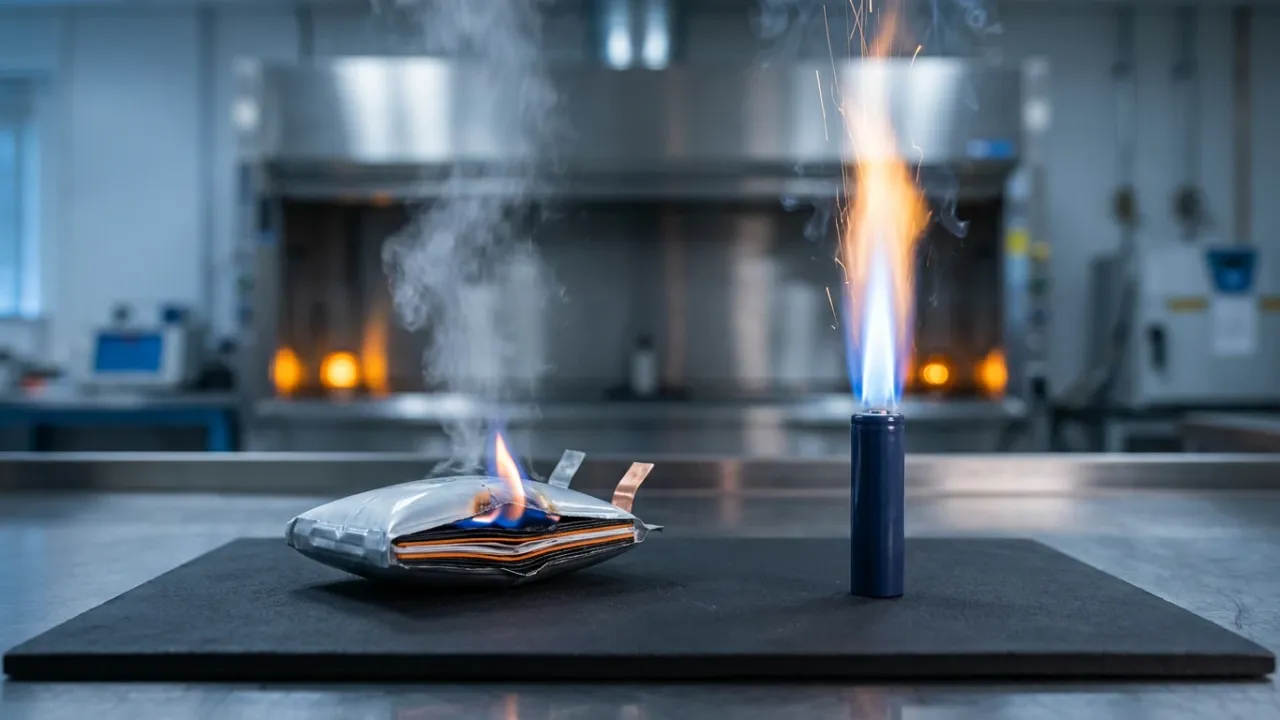
A LiPo battery is a lithium-ion battery. The polymer only names the gel and pouch. Here is why that matters for fire safety.
Battery Fire Safety
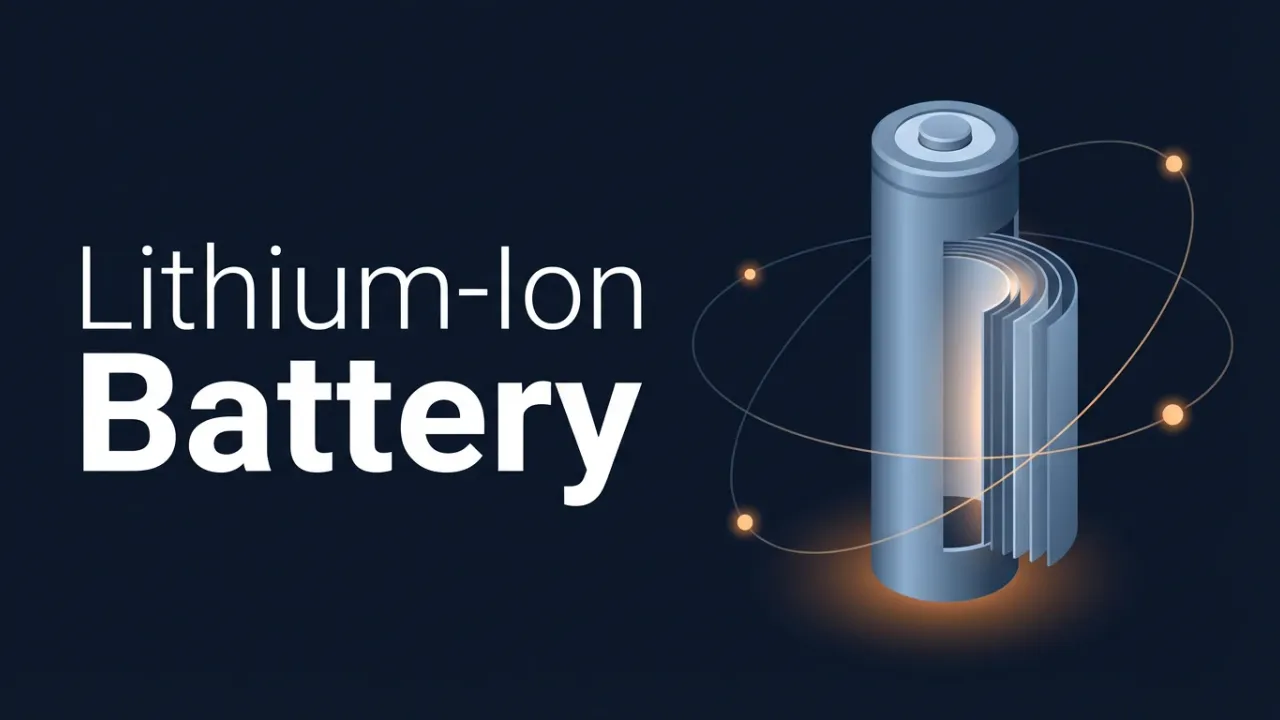
What a lithium-ion battery is, how the 'rocking chair' of ions works, and why this Nobel-winning chemistry also carries real fire risk.