Are EV Fires Really More Common Than Gas Car Fires?
Across U.S., Swedish, Australian, Norwegian and Polish data, EV fires happen 20 to 80 times less often than gas car fires per registered vehicle.
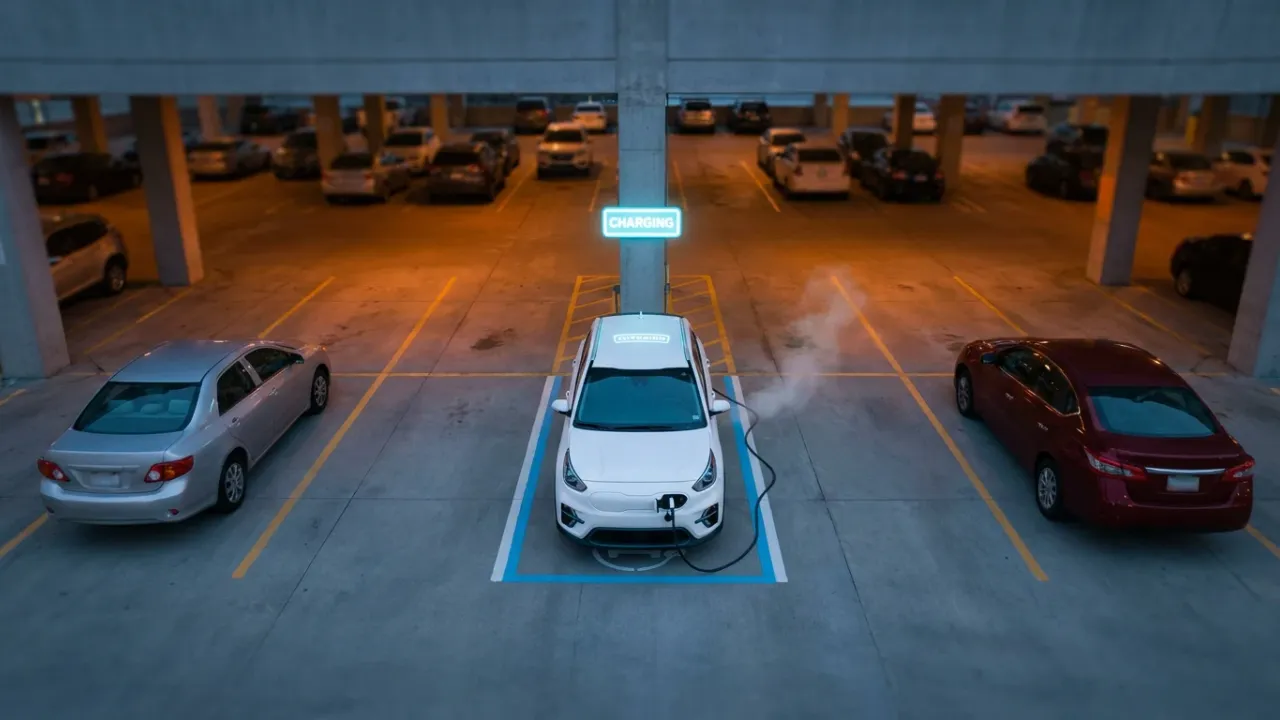
Every viral clip of a Tesla on fire feels like proof. However, in every national dataset we have, EV fires happen far less often than gas car fires. So the public’s mental model sits upside down. This post lays out the numbers, the caveats, and why “less frequent” still does not mean “less dangerous on the day it happens.”
TL;DR on EV fires versus gas car fires
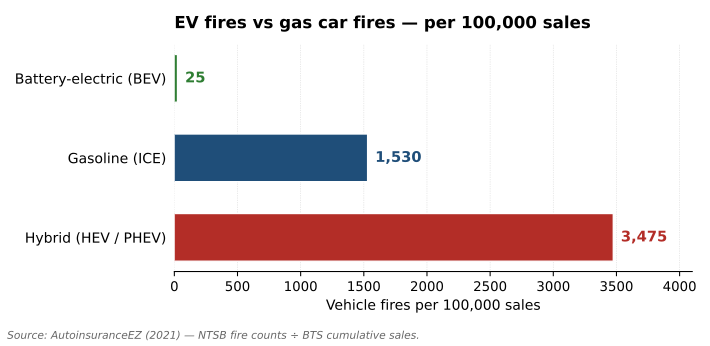
- The most-cited U.S. analysis finds about 25 EV fires per 100,000 sales, against ~1,530 for gasoline cars and ~3,475 for hybrids.
- Tesla’s own filings show one fire per ~135 million miles for its fleet, against the NFPA national average of one per ~17 million miles.
- Sweden’s MSB recorded 23 EV fires across 611,000 EVs in 2022, against ~3,400 fires across 4.4 million petrol or diesel cars — a 20× lower rate per vehicle.
- Severity tells the other half of the story. A single battery pack fire can demand 3,000 to 40,000 gallons of water and may reignite hours or days later.
What NHTSA actually says about EV fires
NHTSA has held one line for more than a decade. First, the agency closed its 2011–2012 Chevy Volt crash-fire probe with a clear verdict. EVs do not pose a greater fire risk than gas cars (NHTSA, 2012). Then in 2021, the agency launched a Battery Safety Initiative. It coordinates work on stranded energy, BMS cyber risk, and crash response.
However, the core finding has not moved. Every vehicle carries some fire risk in a bad crash. Powertrain alone does not decide which side of that bet you sit on.
The 100,000-sales number that started the EV fires debate
In 2021, the insurance aggregator AutoinsuranceEZ combined NTSB fire counts with BTS sales totals. The headline table reads as follows.
| Powertrain | Fires per 100,000 sales |
|---|---|
| Battery-electric (BEV) | 25 |
| Gasoline (ICE) | 1,530 |
| Hybrid (HEV/PHEV) | 3,475 |
Hybrids finishing first surprises most readers. However, it makes mechanical sense. A hybrid carries a fuel tank, a high-voltage pack, and the thermal links between them. Therefore, it picks up risk paths from both worlds.
Also, a key caveat applies. Analysts at IEEE Spectrum flagged that the method mixes a single-year fire count with lifetime sales. So read the exact multiplier as an order-of-magnitude clue, not a precise figure. The direction still holds across every other dataset we checked.
Tesla’s per-mile data on EV fires
Tesla publishes the only maker fire-rate disclosure of its kind. Its Vehicle Fire Safety Report covers 2012 through 2023. It logs about one Tesla fire event per 135 million vehicle miles. Meanwhile, NFPA and U.S. DOT data place the national average near one fire per 17 to 19 million miles. So the Tesla fleet runs about 8× lower per mile.
Two caveats matter. First, Tesla self-reports the figure, so no outside audit exists. Second, Tesla counts wildfires, building fires, and arson that touch its cars. The national average leaves those out. Therefore, on a like-for-like basis, the gap could in fact widen. Older Tesla numbers cited one fire per 205 million miles, so the rate has shifted as the fleet has grown. The order of magnitude still tracks the national data.
Sweden, Australia, Norway: international takes on EV fires
Independent agencies in countries with very different fleets reach the same verdict.
For instance, Sweden’s MSB civil agency logged 23 EV fires across 611,000 EVs in 2022. That works out to 0.004%. The same year saw about 3,400 fires across 4.4 million petrol or diesel cars, or 0.08%. So ICE cars caught fire roughly 20 times more often per registered car. Also, the count has held near 20 per year for three years even as the fleet doubled. The rate, therefore, keeps falling.
Similarly, in Australia, the Defence-funded EV FireSafe group keeps the world’s most rigorous verified battery-fire database. As of October 2025, the group had logged 772 high-voltage battery fires across about 78 million plug-in EVs worldwide. That gives roughly 1 in 100,000 — about 80 times lower than the petrol-and-diesel baseline.
Likewise, in Norway, where BEVs now exceed 28% of the fleet, a 2024 analysis put a BEV’s odds of a fire that year at about 1 in 12,500. The same figure for non-BEVs sat near 1 in 2,500. So the petrol fleet caught fire about 5 times more often even in a country with the world’s most mature EV stock.
In Poland, State Fire Service data tells a similar story. Between 2020 and 2025, EVs accounted for 87 of 51,142 vehicle fires while making up a single-digit share of the fleet.
The ICCT summary from October 2024 sums it up. Though limited, the data show that EV fires happen less often than ICE vehicle fires.
What the NTSB actually warned about
The NTSB Safety Report 20/01, adopted in November 2020, stands as the key U.S. document on EV fire response. Importantly, the report covers response, not frequency. It looks at stranded energy — the residual charge that sits in damaged cells long after the visible flames stop.
The board reviewed four high-profile cases. Three involved high-speed crashes in California and Florida. In each one, the damaged battery reignited after firefighters first knocked it down. One Tesla in Mountain View reignited five days later in the tow yard.
So the NTSB flagged two systemic gaps. First, maker emergency response guides gave little usable guidance on stranded energy. Second, federal safety rules had not caught up with high-voltage battery behavior in bad crashes. The board sent recommendations to NHTSA, 22 EV makers, and six fire-service groups. NHTSA accepted most of them in its 2021 reply.
Why “less frequent” does not mean “less dangerous”
This is where fire-safety researchers cannot soft-pedal the message. EVs catch fire less often. However, that does not make any single EV fire easier to fight.
Water demand. First, a typical gas car fire takes 500 to 1,000 gallons of water to suppress, per Austin Fire Department Division Chief Thayer Smith. A fully involved EV battery fire often needs 3,000 to 8,000 gallons. In extreme cases, crews have used over 40,000 gallons to keep cells cool through reignition cycles.
Reignition risk. Next, damaged cells can light off hours, days, or even weeks after firefighters first call a knockdown. Tow yards now isolate damaged EVs in dedicated “sandbox” zones. That practice responds directly to the Mountain View case in NTSB SR-20/01.
Toxic emissions. Also, thermal runaway in NMC and similar chemistries vents hydrogen fluoride and hydrogen cyanide in ratios that differ from a gas pool fire. So PPE and air-supply rules differ as well. For the chemistry that drives this gap, see our LFP vs NMC battery safety deep dive.
Resource intensity. Finally, a single EV battery fire can tie up a crew for many times the duration of a routine ICE fire. So one event can drain rig availability across a whole service area for the rest of a shift. The Fire Safety Research Institute has logged this pattern across many departments.
How perception got upside-down on EV fires
Three factors widen the gap between the data and public belief.
First, the spectacle. A burning EV throws jet flames, vapor clouds, and multi-hour ops that make great television. A sedan engine fire on the shoulder of I-95 does not. As Georgia Tech’s Paul Kohl told IEEE Spectrum, gas car fires count as everyday events that hardly draw a glance.
Second, the news bias. NFPA puts the U.S. count near 200,000 highway-vehicle fires per year, killing roughly 650 people. None of those make national news. Yet a single viral EV clip can outweigh thousands of quiet ICE events in the public mind.
Third, the mix-up with small e-rides. Fire and Rescue NSW noted that none of the 315 lithium-ion fires it attended in 2024/2025 involved an electric car. The top three sources were e-bikes, e-scooters, and laptop or charger packs. So the public hears “lithium-ion fire” and pictures a Tesla — but those classes do not share an exposure profile.
For the underlying chemistry, see our lithium-ion battery basics primer.
What the recall picture tells us about EV fires
The biggest fire-linked EV recalls give a useful sanity check. Three campaigns shape the picture.
- Chevrolet Bolt EV/EUV (2017–2022). GM’s August 2021 recall covered every Bolt ever built — about 141,000 cars in the U.S. alone. The defect traced to LG-supplied cells. The fix paired battery-module swaps with new diagnostic software.
- Hyundai Kona Electric / Ioniq Electric (2019–2020). NHTSA Recall 21V-127 covered roughly 4,696 U.S. cars and about 80,000 worldwide after at least 13 logged fires linked to a folded anode tab in cells from LG’s Nanjing plant.
- Ford Mustang Mach-E (2021–2022). Ford recall 23S56 covered around 35,000 extended-range and GT cars for high-voltage contactor overheating. Later campaigns then widened the scope after follow-on reports.
However, these campaigns do not undo the rate finding. They explain part of it. Also, gas cars see far more recalls per year for fire-linked causes — fuel leaks, shorts, and ABS faults — yet rarely make headlines.
What this means for fire-safety policy on EV fires
First, treat fire frequency and fire severity as two separate engineering problems. Prevention buys you cell-quality control, BMS robustness, and charging rules. Response buys you fire-blanket kits, water-supply plans at parking decks, ISO 17840-aligned emergency response guides, and crew drills that match what the NTSB logged.
Next, for used-EV buyers, run the VIN through NHTSA’s recall lookup. The 2017–2022 Chevy Bolt, 2019–2020 Hyundai Kona / Ioniq Electric, and 2021–2022 Ford Mach-E ER and GT models all carried fire-linked work. If recall completion sits above 90% on a model line, treat it as a managed risk. Below that, treat it as an open one.
Moreover, for multi-unit homes and underground parking, adopt the EV FireSafe framework for spacing, sprinkler density, and venting. The Swedish MSB data hints that these spaces, not the cars themselves, mark where severity peaks.
Finally, for policymakers, split road-legal EVs from small e-rides in the data. Lumping them together remains the fastest way to misspend the next decade of fire budgets. The two classes share a chemistry. However, they do not share an exposure profile.
For the broader risk-framing math behind these calls, see our F-N curve and societal risk post.
The honest summary
In short, EVs do not catch fire more often than gas cars. By every dataset we have, they catch fire much less often. That finding holds firm enough to act on. However, how to fight the fires that do happen still needs work. Therefore, the next decade of fire-service spending and standards work needs to focus there. “Less frequent” does not mean “less dangerous when they do happen.” Anyone — researcher, regulator, or fire chief — who flattens those two ideas into one does the public a disservice.
Cite this article
Dinh, D. C. (2026, May 15). Are EV Fires Really More Common Than Gas Car Fires?. PyroRisk. https://pyrorisk.net/blog/are-ev-fires-really-more-common-than-gas-car-fires/
Recent posts
Featured posts
Categories
Comments
Related posts
LFP vs NMC Battery Safety: Why Chemistry Decides Fire Risk
LFP vs NMC battery chemistry sets the fire risk before any vent opens. Here is why one chemistry burns hotter, vents more gas, and explodes more often.
Why a LiPo Battery Is Really a Lithium-Ion Battery
A LiPo battery is a lithium-ion battery. The polymer only names the gel and pouch. Here is why that matters for fire safety.
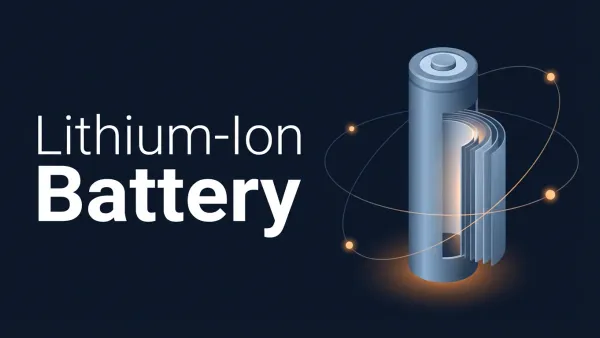
Lithium-Ion Battery Basics: How They Work and Why They Burn
What a lithium-ion battery is, how the 'rocking chair' of ions works, and why this Nobel-winning chemistry also carries real fire risk.