Lithium-Ion Battery Basics: How They Work and Why They Burn
What a lithium-ion battery is, how the 'rocking chair' of ions works, and why this Nobel-winning chemistry also carries real fire risk.
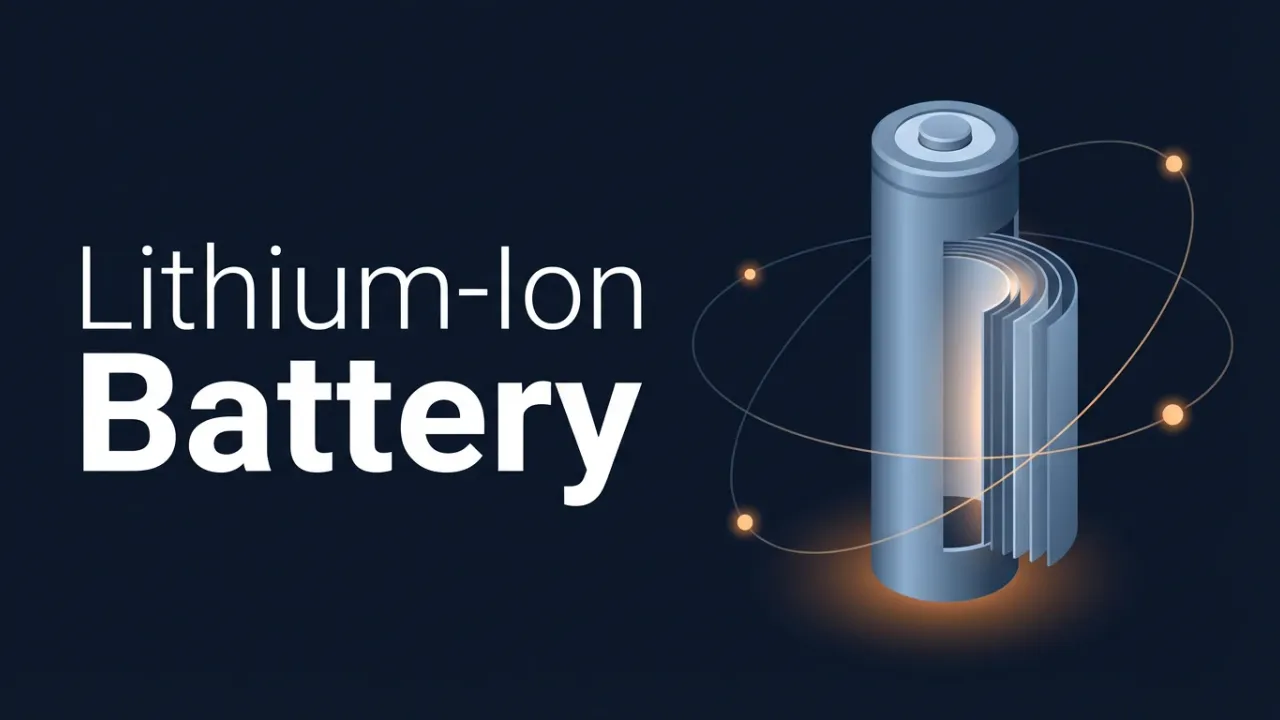
A lithium-ion battery sits inside almost every modern device. Your phone uses one. So does your laptop. Your electric car runs on one. So do the grid-scale packs that steady the power supply for whole cities. In 2025, global demand passed 1 terawatt-hour per year. Pack prices hit a record low of $108 per kilowatt-hour. Yet the same chemistry that makes these cells so light and powerful also makes them flammable. For that reason, knowing how they work matters for everyone, not just engineers.
This first post in our Battery Fire Safety series starts at the start. What is a lithium-ion battery? How does it work? And why do fire safety researchers take it so seriously?
A Nobel Prize-winning invention
A lithium-ion battery stores energy by shuttling lithium ions back and forth between two electrodes. One side is positive. The other side is negative. Between them sits a liquid called an electrolyte. Use the battery, and the ions flow one way, making electricity. Plug it in, and they flow back. Because the ions simply move rather than destroy the electrodes, the cell can recharge hundreds or thousands of times.
That elegant design took three researchers nearly two decades to perfect. In the early 1970s, British-American chemist M. Stanley Whittingham worked at Exxon during the oil crisis. He built the first rechargeable lithium cell using a titanium disulfide cathode and a metallic lithium anode. It produced just over 2 volts. However, the lithium metal formed wispy needles that shorted the cell. As a result, prototypes sometimes exploded.
Then in 1980, American physicist John B. Goodenough at Oxford found that a lithium cobalt oxide cathode could reach up to 4 volts. That doubled the battery’s energy. Five years later, Japanese chemist Akira Yoshino at Asahi Kasei paired Goodenough’s cathode with a safer carbon anode made from petroleum coke. The result was the first lithium-ion battery that made sense to sell. To prove it was safe, Yoshino dropped an iron block on his prototype. It did not explode.
Sony launched the tech in 1991 inside a camcorder. Nearly three decades later, the three inventors shared the 2019 Nobel Prize in Chemistry “for the development of lithium-ion batteries.” Goodenough, at 97, became the oldest person ever to win a Nobel.
How a lithium-ion battery works: a rocking chair for ions
Four parts do the real work, as the U.S. Department of Energy explains. First, the cathode is the positive electrode. Next, the anode is the negative one. Then the electrolyte carries charged particles between them. Finally, a thin plastic separator keeps the two electrodes from touching.
The easiest way to picture it is the “rocking chair” image used by engineers at Argonne National Laboratory and in the DOE’s tech roadmap. Lithium ions rock back and forth between cathode and anode. When you use your phone, ions travel from the anode to the cathode through the electrolyte. Meanwhile, electrons take the long way around through the phone’s circuits. That electron flow is the electricity powering your screen.
When you plug the phone in, the process reverses. A wall charger pushes the ions back to the anode, like water pumped uphill (MIT Climate Portal). Nothing is consumed. The ions just shuttle. Therefore, these batteries can cycle hundreds of times without wearing out.
The Nobel committee put it well. Unlike older batteries that relied on reactions that destroyed the electrodes, lithium-ion cells work because “lithium ions flow back and forth between the anode and cathode.”
Components and chemistries, without the jargon
Most lithium-ion batteries share the same basic anatomy. However, they differ in what the electrodes are made of. Those differences drive cost, performance, and safety.
Cathodes are the main character. According to Battery University, the four most common types are:
- LCO (lithium cobalt oxide): the original 1991 Sony chemistry. Still used in most phones and laptops. Energy-dense but pricey and less stable.
- NMC (nickel-manganese-cobalt): today’s workhorse for electric vehicles and power tools.
- NCA (nickel-cobalt-aluminum): Tesla and Panasonic’s pick for long-range EVs. Very high energy density.
- LFP (lithium iron phosphate): the rising star. Lower energy density, but far more thermally stable, cheaper, and longer-lived. Goodenough invented it at UT Austin in 1996. Today, LFP accounts for roughly half of the global EV battery market. It also rules stationary storage.
Anodes are almost always graphite — the same stuff in a pencil, as Argonne notes. A newer contender is silicon, which can store about 10 times more lithium per gram than graphite. The catch: silicon swells up to 400% when charged, cracking the electrode. For that reason, today’s best cells blend a little silicon into graphite to get the best of both.
The electrolyte is where fire-safety researchers focus much of their work. It usually holds a lithium salt, most often lithium hexafluorophosphate, or LiPF₆. The salt mixes into organic carbonate solvents. Those solvents shuttle ions very well. However, they also burn readily. A standard mix has a flash point around 30 °C (86 °F). That falls below the NFPA threshold for a flammable liquid. In short, every lithium-ion cell holds a small pool of something not unlike lighter fluid.
The separator is the quiet hero. It forms a tiny-pored plastic film, about as thin as plastic wrap. The film lets ions through, yet blocks the electrodes from touching. Modern separators also melt shut at around 130 °C. In other words, they work as a built-in thermal fuse that can rescue a cell that starts to overheat. However, if damage, a factory flaw, or an internal short punctures the separator, the electrodes touch and things can go very wrong very fast.
Shapes, sizes, and where they show up
Li-ion cells come in three main shapes. First, cylindrical cells look like thick AA batteries. The famous 18650 measures 18 mm by 65 mm. You will find it in most laptops and older Teslas. The newer 21700 powers the Tesla Model 3, Rivian, and countless e-bikes. The even newer 4680, shown at Tesla’s 2020 Battery Day, is rigid, easy to cool, and mass-made.
Next, prismatic cells are rectangular and hard-cased. They pack neatly into EV battery trays. For that reason, BYD and most Chinese automakers prefer them.
Finally, pouch cells are flexible foil packages. Smartphones, drones, and cars like the Chevy Bolt use them. They are light but easier to damage.
These three shapes power an amazing range of products. For example, over 1.24 billion smartphones shipped in 2024, each holding a lithium-ion pouch cell. Laptops, tablets, power tools, medical devices, and vapes all run on Li-ion. Electric vehicles drive the biggest volume. In fact, more than 17 million EVs sold in 2024, each with a pack typically between 50 and 100 kilowatt-hours. E-bikes and e-scooters also use Li-ion almost always. On top of that, utilities added a record 200 GWh of lithium-ion storage on the grid in 2024. Li-ion accounted for more than 90% of all new utility-scale battery capacity.
Why the lithium-ion battery dominates
The lithium-ion battery rules the market for four reasons, neatly summed up by the Nobel committee and DOE.
Energy density. Lithium is the lightest metal on the periodic table. It also gives the highest voltage per cell of any rechargeable chemistry in real use. Modern Li-ion cells store 150-270 watt-hours per kilogram. That is roughly 5 to 10 times more than the lead-acid battery in a gas car. It is also twice as much as the nickel-metal-hydride cells in older hybrids.
Long cycle life. Because ions simply rock between electrodes, cells last 500 to 3,000 full charge cycles. LFP chemistries can push past 5,000. As a result, a Tesla EV battery carries a warranty for at least 8 years and 70% capacity retention.
Low self-discharge. A charged Li-ion cell loses only 1-2% of its charge per month. Older NiMH batteries lose 20-30%. Therefore, your laptop can sit in a drawer and still start up.
No memory effect. Unlike old nickel-cadmium batteries, you do not have to fully drain a Li-ion cell before recharging. Top it off whenever you want.
Add a more than 90% price collapse since 2010, from roughly 108/kWh today. It is easy to see why every major industry now runs on lithium-ion.
The flip side: why fire safety matters
The lithium-ion battery’s superpower is its energy density. That is also its Achilles’ heel. The same cell that runs your laptop for ten hours holds enough chemical energy to burn hard if something goes wrong. Unlike most fuels, a Li-ion cell even carries its own oxygen source inside the cathode.
When a cell suffers a puncture, an overcharge, an overheat, or a factory flaw, it can enter thermal runaway. That is a self-feeding chain reaction described by the Electric Power Research Institute. Heat breaks down the flammable electrolyte through pyrolysis. The breakdown releases hydrogen, carbon monoxide, and toxic hydrogen fluoride gas. That heat then spreads to nearby cells, which fail in turn. Flame temperatures in thermal runaway climb above 1,100 °C. Moreover, the fires can burn for hours, reignite days later, and shrug off standard extinguishers.
The statistics tell the story. New York City’s fire department logged 277 lithium-ion battery fires in 2024. That came on top of 268 in 2023 that killed 18 people. Cheap, uncertified e-bike batteries caused most of them. The FAA also logged a record 89 in-flight battery incidents in 2024, up 16% year-over-year. On the grid, the January 2025 Moss Landing fire damaged tens of thousands of battery modules. In fact, it triggered the largest lithium-ion cleanup in EPA history. On top of that, the U.S. Consumer Product Safety Commission issued fresh 2025 warnings on Rad Power e-bike batteries and several other brands tied to dozens of fires.
The good news: these batteries stay very safe on a per-unit basis. For example, electric vehicles burn far less often than gas cars. Roughly 1 EV in 100,000 on the road catches fire, versus about 20 times that rate for gas cars, according to Sweden’s civil protection agency. Grid storage failure rates have also fallen nearly 98% since 2018 as standards matured. In short, the risk is real. However, it stays manageable when batteries are well-made, certified, and used correctly.
What’s next in this series
Knowing the lithium-ion battery is only a first step. In upcoming posts, we will open the cell and follow a thermal runaway cascade second by second. We will look at why firefighters dread these blazes, and how response tactics are evolving. Moreover, we will break down the UL 2271 and UL 2849 rules that split safe e-bike batteries from dangerous ones. Finally, we will share simple charging habits that extend battery life and prevent fires at home.
The lithium-ion battery is one of the great inventions of the last fifty years. It is a Nobel-worthy breakthrough that put wireless in your pocket and electric vehicles on the road. Knowing what is inside it, and why it sometimes fails, is the first step to living safely with a tech that is not going away.
Cite this article
Dinh, D. C. (2026, April 17). Lithium-Ion Battery Basics: How They Work and Why They Burn. PyroRisk. https://pyrorisk.net/blog/lithium-ion-battery-basics/
Recent posts
Featured posts
Categories
Comments
Related posts
Why a LiPo Battery Is Really a Lithium-Ion Battery
A LiPo battery is a lithium-ion battery. The polymer only names the gel and pouch. Here is why that matters for fire safety.
The Science of Pyrolysis: How Heat Unmakes Everything
Pyrolysis — heat breaking molecular bonds without oxygen — drives wildfires, battery thermal runaway, biochar, plastic recycling, and even coffee roasting.
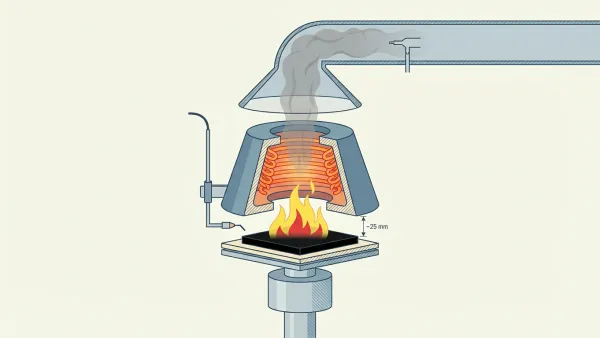
Cone Calorimeter 101: HRR, THR, and MARHE Explained
What the cone calorimeter measures — heat release rate, total heat release, and MARHE — and why each one matters for fire safety.