
Fire Safety Engineering
ASET vs RSET: The Inequality Behind Every Evacuation Plan
ASET vs RSET decides whether a building passes. Here come the timeline, the tenability limits, the equations, and the one term that swings the answer most.
Page 2 of 4.
Fire Safety Engineering
ASET vs RSET decides whether a building passes. Here come the timeline, the tenability limits, the equations, and the one term that swings the answer most.

Battery Fire Safety
A solid-state battery drops the flammable solvent, not the oxidizer or the lithium. Here comes what changes in thermal runaway, and what stays put.

Battery Fire Safety
Off-gas detection reads the vapour a failing cell breathes out before flame. Here comes the window it buys, the sensors that see it, and the limits.

Battery Fire Safety
A lithium battery fire shrugs off CO₂, halon and dry powder. Here comes the heat budget that explains why water, and only water, ends the event.

Battery Fire Safety
Thermal runaway propagation turns one failed cell into a lost pack. Here comes the heat budget that decides it, and the design that stops it.

Fire Testing
Reaction to fire ranks how a product feeds a growing fire. Fire resistance times how long an assembly holds. Mixing up the two has killed people.

Fire Testing
A Euroclass such as B-s1,d0 comes from the SBI test. Here is what each letter measures, and why a component class never proves a facade will hold.

Fire Testing
A UL 94 V-0 mark means a plastic bar self-extinguishes under a 50 W flame. Here is what the test measures, and the four things it never promises.
Fire Fundamentals
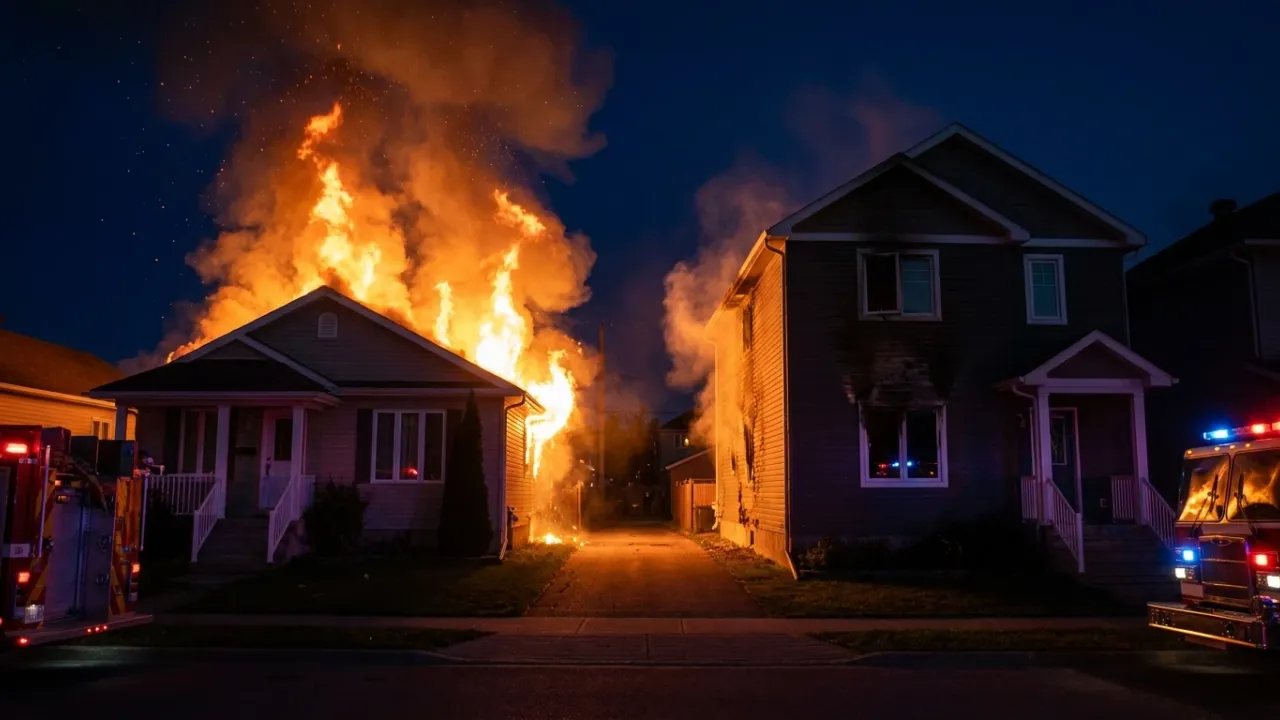
Convection burns up; radiation burns across. How radiant heat, the T⁴ law, and view factors decide whether fire ignites the house next door.
Fire Fundamentals
Slow, medium, fast, ultrafast: how the t-squared curve turns fire growth into numbers, and why modern fuels outrun its four classes.
Fire Fundamentals
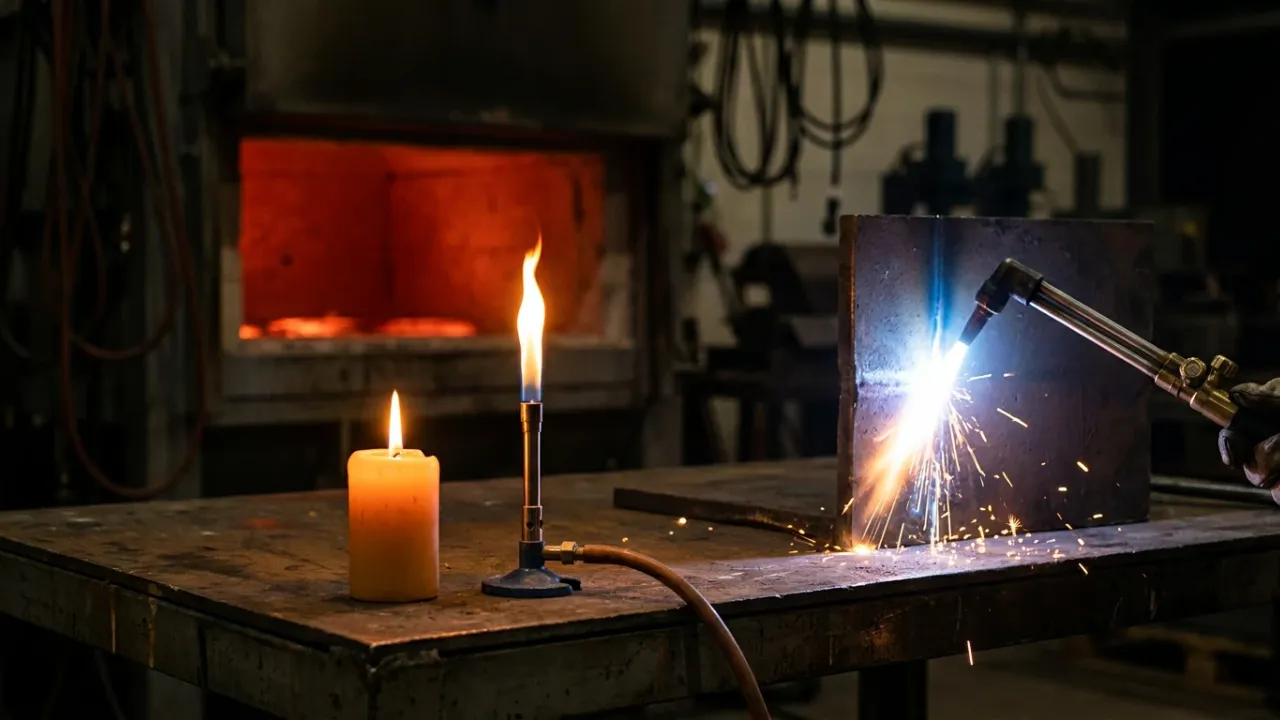
Fire has no single temperature. The adiabatic flame temperature sets a 1,950 °C ceiling, yet real fires burn at 800–1,200 °C. Here is why.
Fire Fundamentals
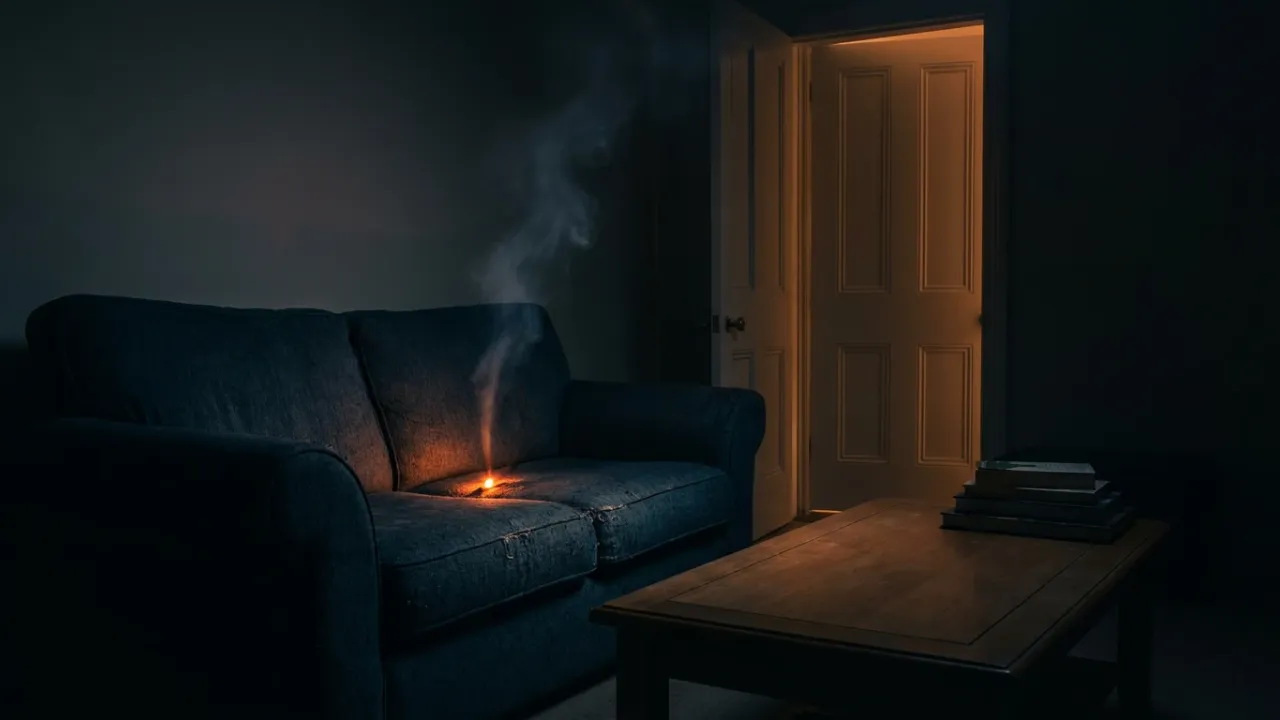
A smoldering fire shows no flame and little heat, yet it loads a house with carbon monoxide for hours while you sleep. Here is the chemistry that kills.